What Is Kava Extract?
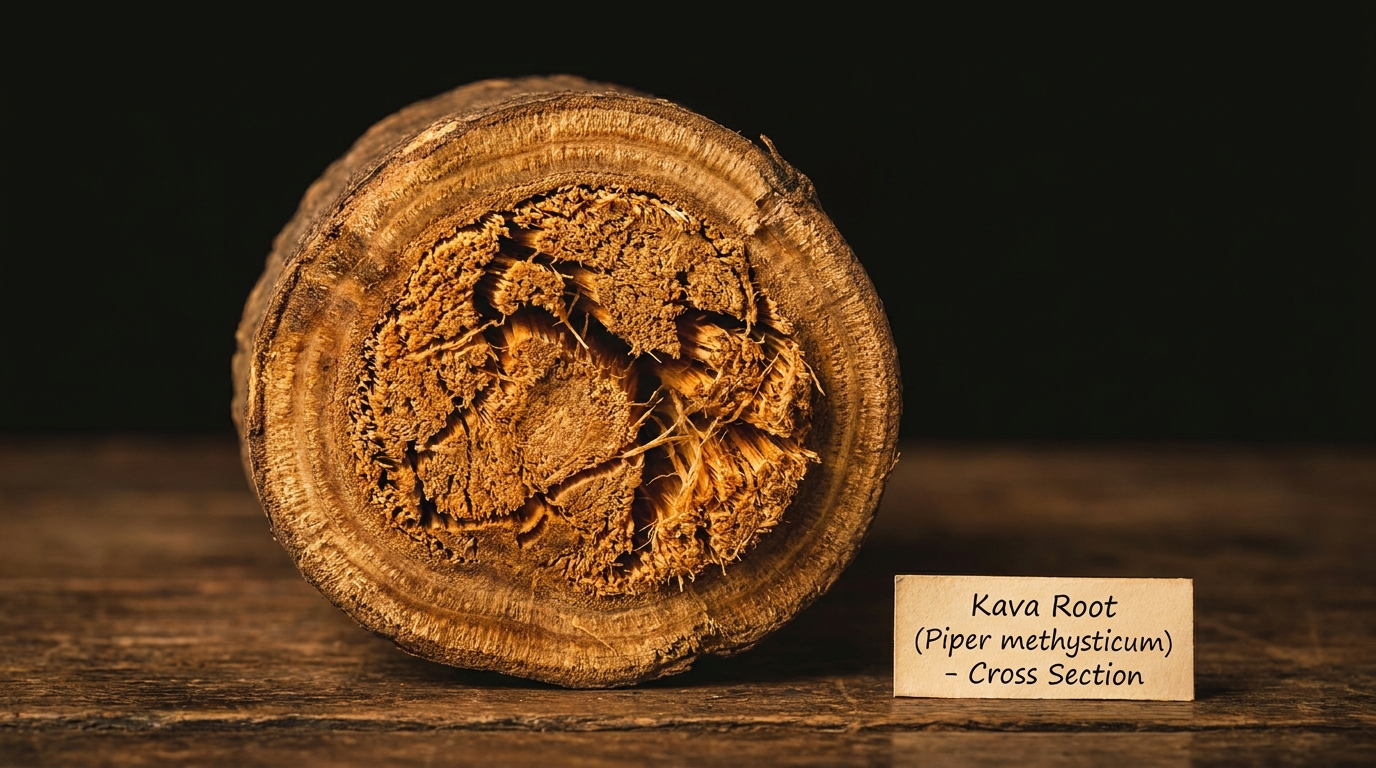
Kava extract is a concentrated preparation of kavalactones — the active compounds in kava root (Piper methysticum) — produced by separating these compounds from the raw plant material using a solvent. The result is a product with a higher kavalactone concentration per gram than raw kava root, allowing for more precise dosing and more convenient delivery formats.
Raw kava root contains approximately 3-20% kavalactones by dry weight, depending on the cultivar, growing conditions, and part of the root used. Extraction concentrates this to 30-70% or higher, depending on the method and target specification. This concentrated form is what you'll find in kava shots, capsules, tinctures, and functional beverages.
For context on what kavalactones actually do in the body, see our article on what kava is and our guide to kava benefits.
Kava Extract vs. Raw Kava Root
The distinction between kava extract and raw kava root is more than just concentration — it affects the chemical profile, onset speed, and user experience:
| Factor | Raw Kava Root | Kava Extract |
|---|---|---|
| Kavalactone content | 3-20% by weight | 30-70%+ by weight |
| Dosing precision | Variable between batches | Standardized and consistent |
| Onset time | 20-40 minutes (tea preparation) | 15-20 minutes (liquid extract) |
| Full spectrum compounds | Yes — all root compounds present | Depends on extraction method |
| Convenience | Requires preparation | Ready to consume |
| Taste | Earthy, peppery, strong | Variable — can be masked in formulations |
Both forms are effective when sourced from noble kava cultivars. The choice between them depends on whether you prioritize the traditional experience or convenience and precision.
Extraction Methods: What Matters and What to Avoid
The extraction method is the single most important quality factor in a kava extract product. Different solvents pull different compounds from the root, and not all of those compounds are desirable.
Water Extraction
Water extraction is the closest to traditional kava preparation — Pacific Island communities have been extracting kavalactones into water for over 3,000 years. Water selectively extracts the six primary kavalactones (kavain, dihydrokavain, methysticin, dihydromethysticin, yangonin, and desmethoxyyangonin) while leaving behind most of the compounds that are not part of the traditional kava experience.
Verdict: Gold standard for safety. Closest to traditional use. Recommended by the WHO.
Ethanol Extraction
Ethanol (food-grade alcohol) extraction is widely used in the supplement industry and produces a clean, concentrated kavalactone extract. Ethanol is efficient at extracting kavalactones and, like water, produces a profile consistent with traditional preparations. Many clinical studies on kava have used ethanol-extracted kavalactone preparations.
Verdict: Safe, well-studied, widely available. The residual ethanol is evaporated during processing — the final product contains no alcohol.
CO2 (Supercritical Carbon Dioxide) Extraction
CO2 extraction uses pressurized carbon dioxide as a solvent, producing an exceptionally pure extract. It's a newer method that's become popular in the botanical supplement industry for its precision and lack of residual solvents. CO2-extracted kava products tend to have the highest kavalactone purity.
Verdict: Safe, premium quality, but more expensive to produce. Excellent for high-potency products.
Acetone Extraction — Avoid
Acetone extraction is the method linked to the early 2000s liver toxicity cases in Europe. Acetone pulls a broader range of compounds from the plant material than water or ethanol — including flavokavains and pipermethystine from non-root plant parts. These compounds are not present in meaningful quantities in traditional water-based preparations and are associated with hepatotoxicity.
Verdict: Avoid. Acetone-extracted kava products are the ones that caused the safety scare. No reputable kava brand uses acetone extraction today. For the full story on the hepatotoxicity cases and their connection to extraction methods, see our article on kava and liver damage.
Understanding Standardization: What “30% Kavalactones” Means
When a kava extract label says “standardized to 30% kavalactones,” it means that 30% of the extract's total weight consists of active kavalactone compounds. This standardization is how manufacturers ensure consistent dosing from batch to batch.
Here's how to calculate your actual kavalactone intake from a standardized extract:
- 500mg capsule, 30% kavalactones = 150mg kavalactones per capsule
- 500mg capsule, 50% kavalactones = 250mg kavalactones per capsule
- 2oz liquid shot, 150-200mg kavalactones = the amount is listed directly (no calculation needed)
The FDA's December 2025 guideline recommends no more than 290mg of kavalactones per day. When evaluating a kava extract product, always check the kavalactone content per serving — not just the total extract weight. A 1,000mg extract at 15% kavalactones (150mg) delivers the same active dose as a 300mg extract at 50% (150mg).
For specific dosing recommendations, see our kava dosage guide.
Noble vs. Tudei Cultivars: The Non-Negotiable Distinction
Extraction method is critical, but the source cultivar is equally important. All quality kava extract starts with the right plant.
Noble Kava Cultivars
Noble kava — including varieties like Borogu, Melo Melo, Pouni Ono, and Fu'u — produces extracts with a kavain-dominant kavalactone chemotype. This means kavain (the kavalactone most associated with clear-headed relaxation and mood lift) is the primary active compound. Noble cultivars have been selected and cultivated by Pacific Island communities for thousands of years specifically for their pleasant, safe effects.
Vanuatu — the world's largest kava producer — legally mandates that all kava exports be noble varieties. This isn't arbitrary regulation; it's codified traditional knowledge.
Tudei Kava Cultivars
Tudei (“two-day”) kava cultivars produce extracts with elevated levels of flavokavain B, dihydromethysticin, and other compounds that cause heavy, unpleasant sedation lasting 24-48 hours, nausea, and the hepatotoxicity observed in the European cases. Tudei kava is cheaper to produce, which is why some low-quality products use it.
How to tell:If a kava extract product doesn't specify the cultivar type, be cautious. Reputable brands explicitly state they use noble kava. If the product just says “kava extract” with no cultivar information, it may contain tudei kava.
How to Read a Kava Extract Label
Here are the specific things to look for when evaluating a kava extract product:
- Kavalactone content per serving — Should be clearly stated in milligrams. Avoid products that list only total extract weight without specifying kavalactone percentage or milligrams.
- Extraction method — Look for water, ethanol, or CO2 extraction. If the method isn't disclosed, contact the manufacturer or choose a different product.
- Cultivar type — Noble kava should be specified. Bonus points for naming the specific cultivar (Borogu, Melo Melo, etc.).
- Plant part used — Should say “root” or “root and rhizome.” Avoid products that include stems or leaves.
- Third-party testing — COA (Certificate of Analysis) for potency, purity, and contaminants. This is the gold standard for quality assurance.
- No proprietary blends — If kavalactones are hidden inside a “proprietary blend” with undisclosed individual amounts, you can't verify the dose.
The Six Primary Kavalactones
A high-quality kava extract contains a balanced profile of the six major kavalactones, each contributing specific effects:
| Kavalactone | Primary Effect | Notes |
|---|---|---|
| Kavain | Anxiolytic, mood lift | Dominant in noble cultivars — the most desirable kavalactone |
| Dihydrokavain | Muscle relaxation, calm | Synergistic with kavain |
| Methysticin | Anti-inflammatory, mild sedation | More prominent in heavier kava varieties |
| Dihydromethysticin | Sedation, sleep support | Higher in tudei — responsible for the “two-day” effect |
| Yangonin | CB1 receptor activity, relaxation | Interacts with the endocannabinoid system |
| Desmethoxyyangonin | MAO-B inhibition, mood support | May contribute to kava's antidepressant properties |
The ratio of these six kavalactones — called the “chemotype” — is what distinguishes one kava cultivar from another and determines the character of the experience. Noble cultivars are kavain-forward (chemotype starting with 4-2), while tudei cultivars are dihydromethysticin-forward (chemotype starting with 2-5).
CHILLR MODE: Extract Done Right
CHILLR MODE uses a noble kava root extract delivering 150-200mg of kavalactones per 2oz shot. The extraction is solvent-appropriate (no acetone), the cultivar is noble, and the kavalactone content is clearly disclosed — not hidden in a proprietary blend.
Combined with five additional active ingredients— kanna, L-theanine, lion's mane, and more — CHILLR MODE represents a modern application of kava extract done correctly: right cultivar, right extraction, right dose, full transparency. No kratom. No alcohol. $8.99 per shot.
For more on how kava extract products compare to other formats, see our guide to kava shots and our dosage guide.
Bottom Line
Kava extract is the most practical way to consume kava — it's concentrated, standardized, and convenient. But the quality of a kava extract depends entirely on three factors: the extraction method (water, ethanol, or CO2 — never acetone), the cultivar source (noble only — never tudei), and the transparency of labeling (kavalactone mg per serving, not hidden in proprietary blends).
When those three criteria are met, kava extract delivers a safe, effective, and predictable experience backed by the WHO, the FDA, and 3,000 years of traditional use. When they're not, you're gambling on a product that may contain the wrong compounds from the wrong plant. Read the label. Know what you're getting. Choose noble kava, proper extraction, and disclosed dosages — every time.